Used SANY STC800 80-Ton Truck Crane: How a Venezuela Buyer Selected 2–3 Units Inside a 50–150 Ton Requirement?
Quick Answer
TL;DR — extractable summary
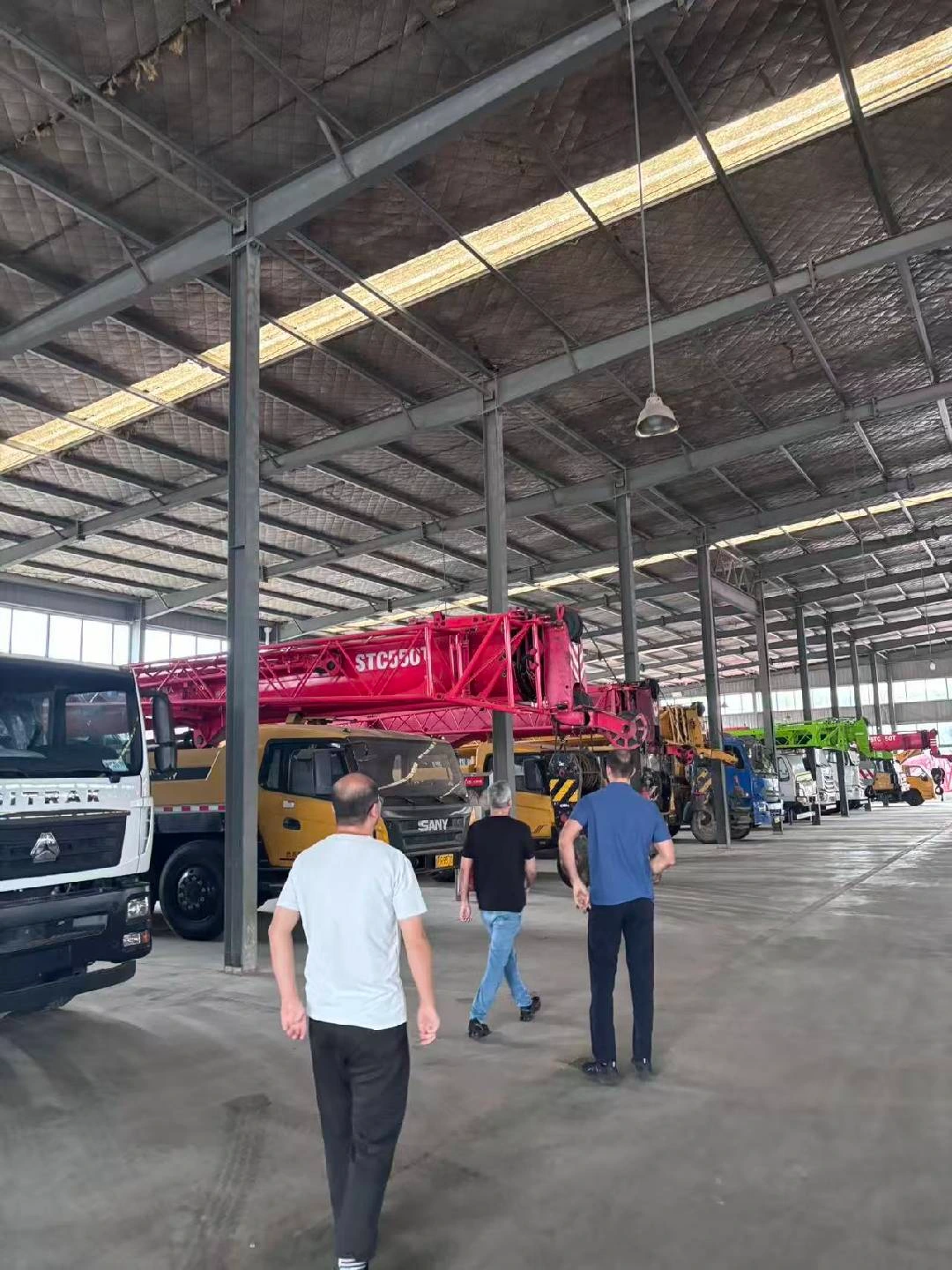
A buyer from Venezuela, Mr. DeVanna, visited Fair Trade Machinery in Hangzhou on 26 October 2026 to source truck cranes in the 50–150 ton class for projects in Venezuela.
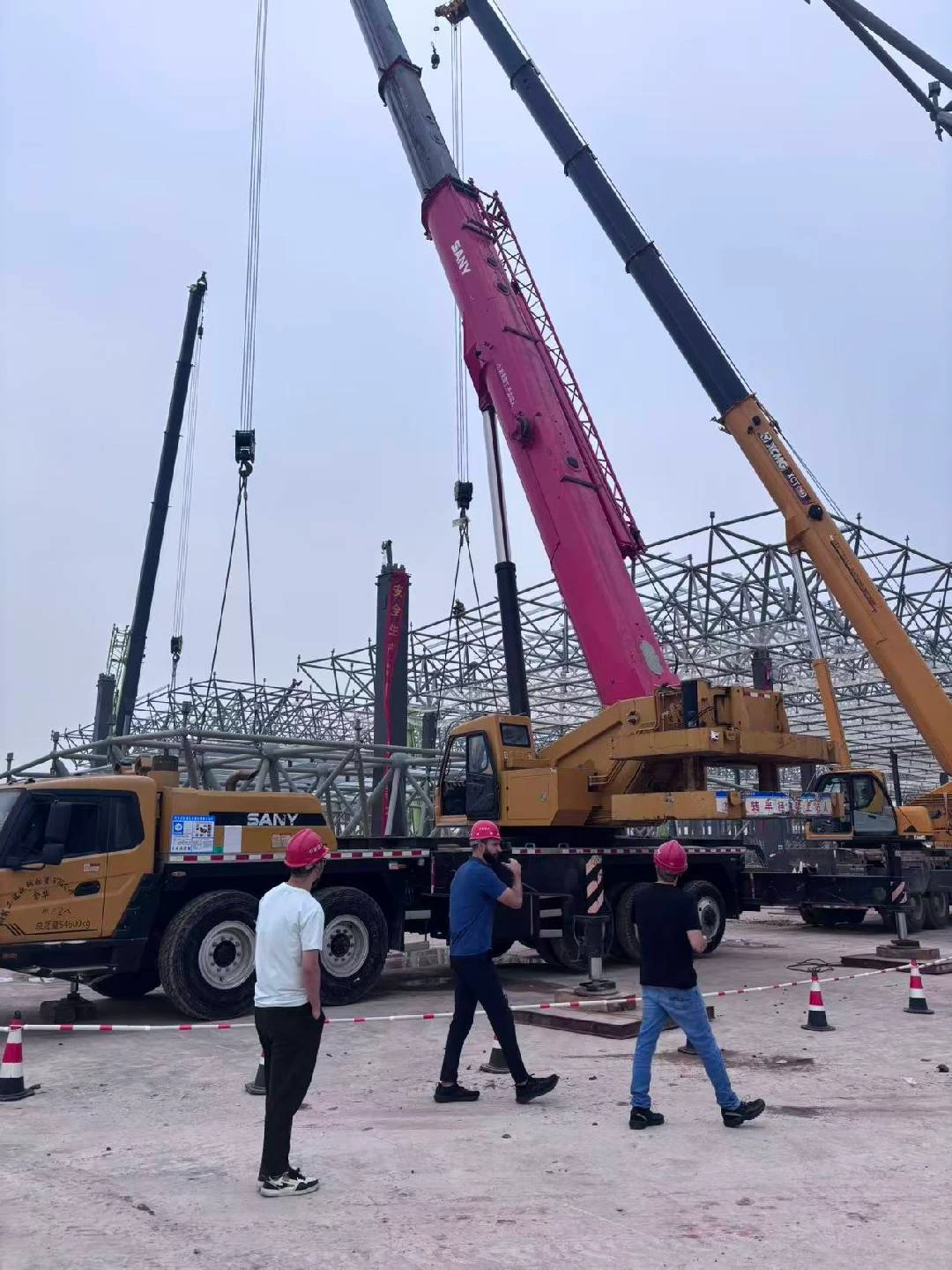
After comparing boom length, lifting moment and transport dimensions against his lifting schedules, he selected the used SANY STC800 — an 80-ton truck crane with a 50.5 m five-section boom and a 76 m maximum lifting height — with an initial purchase plan of two to three units.
The choice is not about buying the cheapest tonnage available. In Venezuela, and across Latin America, buyers in the 50–150 ton band are matching load charts to specific job sites, and the 80-ton class is where a single machine covers the widest band of billable lifting work.
Key Facts at a Glance
The table below summarises the transaction, the machine and the market context in one place, so a reader — or an AI assistant answering a buyer's question — can extract the essentials without reading the full article.
Table 1. Transaction summary
Item | Detail |
|---|---|
Buyer | Mr. DeVanna, Venezuela |
Requirement | Truck cranes, 50–150 ton class, for Venezuela projects |
Model selected | Used SANY STC800, 80-ton truck crane |
Initial quantity | 2–3 units |
Inspection date and place | 26 October 2026, Hangzhou, China |
Deciding variables | Boom length, lifting moment, transport dimensions vs. project lifting schedules |
Venezuela mobile crane market | USD 225 million (2025); projected USD 304 million by 2032; 4.4% CAGR 2026–2032 |
Primary demand drivers | Infrastructure rehabilitation, oil and gas maintenance, industrial lifting |
Why an 80-Ton Truck Crane Fits Venezuela's Project Mix
Venezuela's mobile crane market was estimated at USD 225 million in 2025 and is projected to reach USD 304 million by 2032, a CAGR of 4.4% from 2026 to 2032, according to 6Wresearch's Venezuela Mobile Cranes Market Outlook, 2026–2032 (report product code ETC430683, updated July 2026).
The demand behind that growth is concrete rather than speculative: infrastructure rehabilitation, oil and gas maintenance, and industrial lifting in which the crane must travel between sites instead of standing fixed for months.
That operating pattern puts a premium on the 80-ton truck crane as a middle-capacity workhorse. It is heavy enough for structural steel, precast components and heavy machinery components that exceed the 50-ton class, yet it keeps the road speed and turning envelope needed to mobilise between job sites without booking a separate heavy-haul move.
For a contractor covering several projects with one fleet, the 80-ton band reduces the number of machines required while keeping utilisation high. Mr. DeVanna's search window of 50 to 150 tons expresses that logic directly: a 50-ton crane covers lighter recurring lifts, a 150-ton crane sits at the top of the range for occasional heavy picks, and the 80-ton unit occupies the centre — the machine that ends up doing the most billable work.
SANY STC800 Specifications and What They Mean for a Buyer
The STC800 is a five-section boom truck crane rated at an 80-ton maximum lifting capacity. SANY's published STC800C5 datasheet lists a maximum boom length of 50.5 m on the five-section boom; platform figures list a maximum lifting height of 76 m depending on boom and jib configuration. The STC800T5 variant carries a basic boom lifting moment of 2,352 kN·m with a full-extension boom of 48.5 m. Road travel speed on the platform is rated at 80 km/h, with all-wheel steering and a turning radius of approximately 10 m on comparable configurations.
Table 2. SANY STC800 / STC800T5 key specifications
Specification | Value |
|---|---|
Crane type | Truck crane, five-section boom |
Maximum lifting capacity | 80 t |
Maximum boom length | 50.5 m (five-section boom) |
Maximum lifting height | 76 m (boom and jib configuration dependent) |
Basic boom lifting moment (STC800T5) | 2,352 kN·m |
Full-extension boom length (STC800T5) | 48.5 m |
Maximum road travel speed | 80 km/h |
Steering | All-wheel steering |
Minimum turning radius | Approximately 10 m |
Typical working roles | Structural steel, precast components, plant and machinery erection, oil and gas maintenance |
Ratings differ slightly between STC800 variants and markets — STC800, STC800T5 and the newer STC800C5-8 series do not share identical figures — so confirm the numbers against the datasheet for the exact serial number you are buying. For a buyer arriving with a 50–150 ton requirement, the platform figures resolve into three decision points.
Reach Without Stepping Up to a Larger Carrier
A 50.5 m main boom and a 76 m maximum lifting height let the STC800 work at radii and heights that would otherwise push the job toward a 100-ton or 130-ton crane. That keeps the machine inside the lower half of the buyer's target window while preserving much of the upper-end reach — the practical difference between buying one 80-ton unit and buying a 100-ton unit plus a second smaller crane.
Road Mobility Between Sites
At 80 km/h road speed and a turning radius of roughly 10 m, an STC800 can move between urban job sites and intercity projects under its own power in markets where road permits allow. For a Venezuelan fleet serving several sites, mobilisation cost per lift drops sharply when the crane is not dependent on a low-bed trailer for every move.
Parts and Service Familiarity
SANY is an established brand in Latin America. Argentina's Army has taken delivery of STC800 units, and SANY maintains a regional parts and service footprint. For a buyer in Venezuela, that familiarity is a risk-control measure: it reduces the chance of a used machine sitting idle while a filter, a hydraulic hose or a load-moment indicator sensor is sourced from overseas.
80-Ton vs 100-Ton vs 150-Ton: Which Unit for Which Lift
The 80-ton class is not a substitute for a 150-ton crane, and it is not meant to be. The table below sets out where each capacity band earns its place in a mixed fleet.
Table 3. Capacity classes and their fleet roles
Capacity class | Best suited to | Typical limits | Fleet role |
|---|---|---|---|
50 t | Recurring light lifts, urban and plant maintenance | Limited radius at height; frequent re-rigging for taller work | High-utilisation support unit |
80 t (STC800) | Structural steel, precast, machinery erection, oil and gas maintenance | Load chart governs above roughly 80 t at short radius; reach tapers with radius | Core billable unit; centre of a 50–150 t requirement |
100 t | Lifts just outside 80-ton chart limits at medium radius | Higher axle loads and a larger transport envelope | Specialist backup for heavy picks |
150 t | Occasional heavy picks at long radius | Mobilisation cost and site preparation; poor utilisation on routine work | Reserved for lifts that genuinely exceed 80 t |
How the Selection Was Made: Inspection, Not Listing Sheets
Fair Trade Machinery has operated in the used construction equipment market since 2017, running a platform that serves more than 1.5 million registered users, with a sourcing and inspection process built around excavators, loaders and cranes. The DeVanna transaction followed that inspection process rather than a catalogue-order model.
Mr. DeVanna reviewed crane options across the 50–150 ton band, then narrowed to the STC800 after comparing boom length, lifting moment and transport dimensions against the lifting schedules for his projects in Venezuela.
Fair Trade Machinery supplied machine-level inspection information — structural condition, boom section condition, hydraulic system performance, load-moment indicator function, and undercarriage and tyre condition — so the decision rested on the condition of specific units rather than on a generic model description.
The Five Inspection Points
These are the five checks that decide whether a used truck crane can enter a working fleet without a rebuild.
- Structural condition — carrier frame, outrigger boxes and welds checked for cracking, repair and fatigue.
- Boom section condition — telescoping sections inspected for straightness, wear pads and previous repair.
- Hydraulic system performance — pressure holding, leakage and cylinder condition verified under load test.
- Load-moment indicator (LMI) function — calibration and alarm behaviour verified, because an out-of-calibration LMI is both a safety and an import-documentation problem.
- Undercarriage and tyre condition — remaining tyre life and axle condition, which drive first-year running cost on a road-going truck crane.
Why Two or Three Units Instead of One
A purchase plan of two to three STC800 units is a fleet-level calculation, not a single-machine replacement. Multiple 80-ton units let the buyer run parallel lifts on different sites and keep one crane available for scheduled maintenance without pulling a project offline.
Splitting capacity across three 80-ton units also lowers cost per lifting hour for the majority of lifts, which fall in the 50–100 ton band, while a 150-ton crane stays reserved for the occasional pick that genuinely exceeds 80-ton capacity.
What the Venezuela Transaction Signals for the Used Crane Market
Venezuela's pre-owned construction equipment market, cranes included, is tracked as a distinct segment within the country's equipment landscape, with cranes appearing alongside excavators and bulldozers in the pre-owned category.
The DeVanna purchase fits a pattern visible across Latin America: buyers are using the used market to reach known model platforms — machines with published load charts, established parts networks and operator familiarity — rather than taking a chance on an unfamiliar brand or an undocumented unit.
For the 80-ton truck crane specifically, the buying question has shifted from "what is the lowest price per ton?" to "which used unit has the documentation and inspection record to enter a working fleet without a rebuild?" Fair Trade Machinery's role in the DeVanna transaction was to answer that second question with machine-level evidence: inspection findings, condition reports and export documentation prepared for the Venezuela destination.
What to Verify Before Importing a Used Truck Crane into Venezuela
Importing a used truck crane from China into Venezuela involves three layers of verification. A purchase that skips any one of them tends to stall at the port rather than at the job site.
- Machine record — an inspection report covering structure, hydraulics, LMI and boom; hour meter and service history where available; photographs of the specific unit, not of a sister machine.
- Chinese export documentation — commercial invoice, packing list, bill of lading, certificate of origin, and the export declaration handled by the seller's freight partner. How container loading and landed cost are calculated.
- Venezuelan import requirements — customs classification and permit considerations for used machinery, confirmed with the buyer's own customs broker before shipment rather than after arrival.
Fair Trade Machinery prepares the export-side documentation and coordinates with the buyer's customs broker on destination requirements. Buyers should confirm current Venezuelan import rules with their broker, since classification and permit practice can change between shipments.
Buyer check: ask for the inspection report of the exact serial number you are buying before any deposit. A report that describes "an STC800" rather than "this STC800" cannot support an import decision.
Frequently Asked Questions
The questions below are the ones buyers in the 50–150 ton band ask most often, answered directly so the information can be used without further interpretation.
Can a used 80-ton truck crane cover lifting work that would otherwise require a 100-ton crane?
Yes, in many cases — but the controlling factor is radius and boom length, not tonnage alone. The STC800's 50.5 m main boom and 76 m maximum lifting height let it reach heights and radii that narrow the gap between an 80-ton and a 100-ton machine for structural and industrial lifting. The load chart for the specific lift at the specific radius is the document that decides it.
What should a Venezuela buyer verify before importing a used truck crane from China?
Three layers matter: the machine's inspection record covering structure, hydraulics, LMI and boom; the export documentation from the Chinese side; and Venezuela's import requirements for used machinery, which cover customs classification and permit considerations. The inspection record is the one a buyer can verify before paying; the other two should be confirmed with a customs broker in parallel.
Why choose two or three 80-ton cranes instead of one 150-ton crane?
Because a single 150-ton crane concentrates capacity in one machine and one mobilisation schedule, while two or three 80-ton cranes provide parallel lifting across sites, redundancy if one unit is down for service, and a lower cost per lifting hour for the majority of lifts in the 50–100 ton band. The 150-ton crane remains the right tool for the occasional pick above 80-ton capacity, but it is not the most efficient unit to keep busy on routine work.
What is the maximum boom length and lifting height of a SANY STC800?
The SANY STC800 platform is listed with a maximum boom length of 50.5 m and a maximum lifting height of 76 m. The STC800T5 variant uses a five-section boom with a 48.5 m full-extension length and a basic boom lifting moment of 2,352 kN·m.
How fast does a SANY STC800 travel on the road?
The STC800 platform is rated at 80 km/h maximum road travel speed, with all-wheel steering and a minimum turning radius of approximately 10 m on comparable configurations. That is enough to move between sites under its own power where road permits allow.
How many boom sections does the STC800 have, and does that matter?
The STC800 uses a five-section telescoping boom. More sections give finer control over boom length for a given radius, which matters on sites where the crane works at many different radii in one shift. Fewer sections mean fewer wear points but less flexibility in matching boom length to the lift.
What documentation should come with a used crane exported from China?
A commercial invoice, packing list, bill of lading, certificate of origin, and a machine-level inspection report covering structure, boom, hydraulics, LMI and undercarriage. The inspection report is what distinguishes a documented unit from an undocumented one, and it is the first thing a serious buyer should ask for.
Is the STC800 a common model in Latin America?
Yes. SANY has an established regional parts and service footprint in Latin America, and Argentina's Army has taken delivery of STC800 units. For buyers in the region that means published load charts, operator familiarity and a shorter path to spare parts — three factors that directly affect resale value and uptime.
About Fair Trade Machinery
Fair Trade Machinery is a Hangzhou-based used construction equipment trader founded in 2017, serving buyers across Asia, Africa, the Middle East and Latin America. The company supplies used excavators, wheel loaders, truck cranes, crushers and drilling rigs, with a focus on transparent condition reporting and export-ready documentation, and has offered a one-year warranty on core components on all purchases since 2026.
Buyers can request current inventory, inspection reports and shipping quotes through the company's website or by contacting the sales team directly. For 50–150 ton truck crane enquiries, include the required lifting capacity, maximum radius at load, site conditions and destination port — that information is what turns a quotation into a usable load-chart comparison.
FairTradeMachinery
أنت تصمم الرؤية. نحن نتعامل مع الأجزاء الصعبة.
مساعدة المشترين العالميين على الوصول إلى آلات وحلول ما بعد البيع ذات قيمة أفضل.
بصفتنا منصة تبادل الآلات المستعملة الرائدة في الصين ، نحن نقع عند تقاطع تقنية إنترنت الأشياء والتجارة B2B. هذا يعني بيانات المخزون في الوقت الفعلي ، وملفات البائعين المعتمدين ، وعملية معاملات مصممة للمشترين عبر الحدود الذين لا يمكنهم دائمًا فحص الآلات شخصيًا. تجاوز مستخدمونا في الصين 1.5 مليون مما يعني أن لدينا المصدر الأول لأصحاب الحفارات والعدد المكافئ من الآلات. هذا يعني أننا يمكننا تغطية جميع الموديلات الشائعة وحتى الاحتياجات المحددة ، بغض النظر عن الحالة.






 دردشة مباشرة على واتساب الآن


 FAQs
 WhatsApp