How Big a Used Crane Do You Need for Urban Demolition in Ethiopia?
Quick Answer: For old-city demolition in Addis Ababa — mostly G+2 to G+5 masonry buildings on 4–8 m lanes — a used 16-ton truck crane covers about 80% of the lifts and is the best single-machine choice. Step down to 8–12 tons where outriggers cannot open in alleys and row-house plots; step up to 25 tons only for six storeys and above, picks beyond roughly 25 m radius, or lifting over the street with a jib. Budget USD 20,000–56,000 FOB China for a 16-ton unit.
Key Takeaways
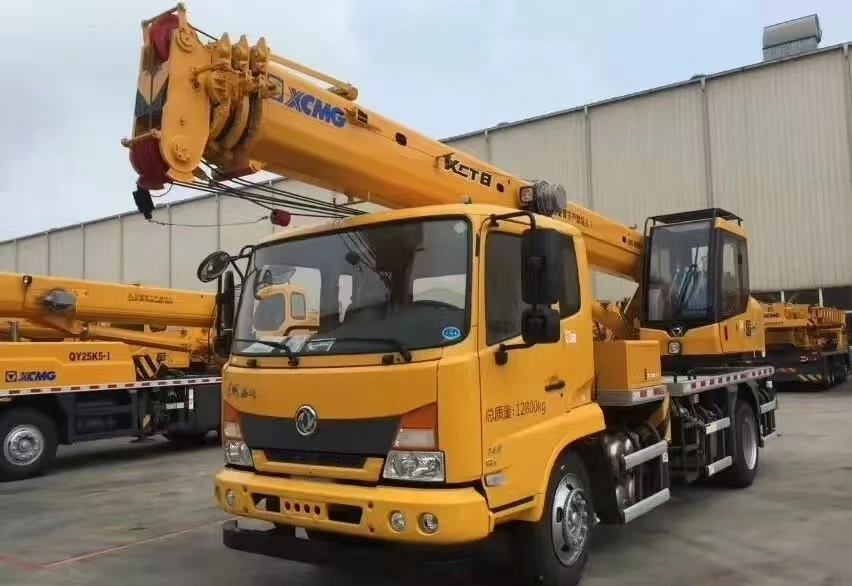
• Tonnage is set by building height and street width, not by the weight of the debris: 16 t reaches 30.7 m of main boom, needs about 6.9 m of usable street for its outriggers.
• Addis Ababa's Corridor Project (launched December 2022, phase two from October 2024, 132 km across eight corridors) is driving demolition in Piassa, Kazanchis and Kebena — low-rise, dense, narrow-lane work where a 25-ton crane often cannot even set up.
• Capacity at radius, not nominal tonnage, decides the lift: a 16-ton crane holds about 1.9 t at 20 m and 1.3 t at 30 m (derived from its 388 kN·m full-boom moment; verify against the crane's own load chart).
• Landed cost adds roughly USD 5,000–8,000 per unit over FOB China (RoRo to Djibouti, port handling, 780 km overland to Addis, COC inspection) before Ethiopian duty and 15% VAT.
• A valid Certificate of Conformity (COC) under Ethiopia's PVoC scheme is mandatory before shipment, and used construction machinery draws extra scrutiny — start certification before you pay the balance.
What does demolition work in Addis Ababa actually involve?
Ethiopia's capital is in the middle of its largest physical transformation in decades. The Addis Ababa City Corridor Project was launched by the city administration on 29 December 2022, with the second phase beginning in October 2024 and spanning 132 km across eight corridors — including the 40.4 km Kazanchis–Estifanos–Meskel Square–Mexico–Churchill–Arat Kilo axis and the 20 km Kebena riverside corridor. Reporting on the programme describes historic low-rise neighbourhoods in Piassa, Kazanchis and Kebena being cleared, with more than 11,000 residents relocated.For a crane buyer, that translates into a very specific duty cycle:
• Buildings: mostly G+2 to G+5 load-bearing masonry and confined-masonry structures, often with corrugated-iron roofs, timber trusses, small precast slabs and rooftop water tanks. Very few steel-frame towers.
• Streets: 4–8 m asphalt or compacted lanes, frequently with open drains, overhead low-voltage lines, street trading and pedestrians within the swing radius. There is usually no dedicated crane pad.
• Lifts per day: many small picks rather than few heavy ones — debris skips (0.5–2 t), roof sheets and trusses, steel beams and columns being salvaged, precast panels (1–3 t), generators, water tanks, site containers.
• Constraints that decide the machine: usable width for outriggers, reach over the building line, and the ability to travel between plots several times a day.
Add one local factor that most imported-crane guides miss: Addis Ababa sits at roughly 2,350 m altitude. Naturally aspirated engines lose output at that height, and cooling systems work harder in the dry season dust. Prefer a turbocharged carrier, and check radiator, fan drive and air-filter condition on the unit you inspect.
Which tonnage fits which building and street?
Table 1 Tonnage bands for demolition work (factory catalogue basis; verify each used unit against its nameplate and load chart)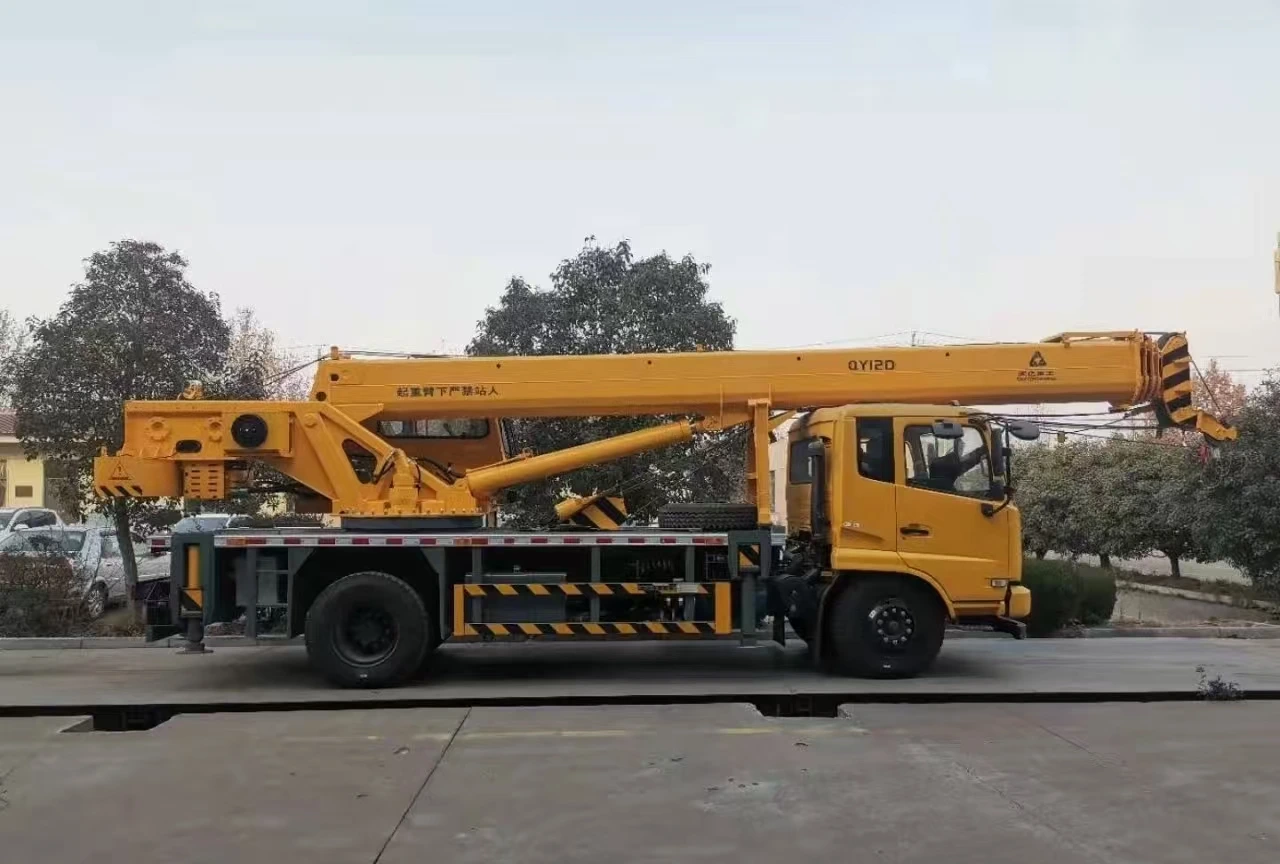
Class | Representative model | Main boom (full) | Basic-boom moment | Outrigger footprint (long. × lat.) | Carrier / GVW | Min. usable street width* | Best for |
|---|---|---|---|---|---|---|---|
8t | XCMG QY8D-class | ≈17–19 m (+ jib to ≈22–26 m; batch-dependent) | ≈235–245 kN·m | ≈3.8–4.0 × 3.5–4.3 m | 2 axles, ≈10–11 t | ≈5.5 m | Alley and row-house demolition, debris skips, roof-level picks on G+1–G+3 |
12t | XCMG QY12 | 21 m (+5.5 m jib = 26.5 m) | 410 kN·m | 3.98 × 4.8 m | 2 axles, 16 t | ≈6.3 m | Narrow plots with 3–4 storeys, tight turning (18 m turning circle) |
16t | XCMG QY16D | 30.7 m (+ jib = 38.5 m) | 686 kN·m (388 kN·m full boom) | 4.6 × 5.4 m | 3 axles, 24 t | ≈6.9 m | The sweet spot: G+3–G+5 demolition, precast panels, steel salvage, over-roof reach |
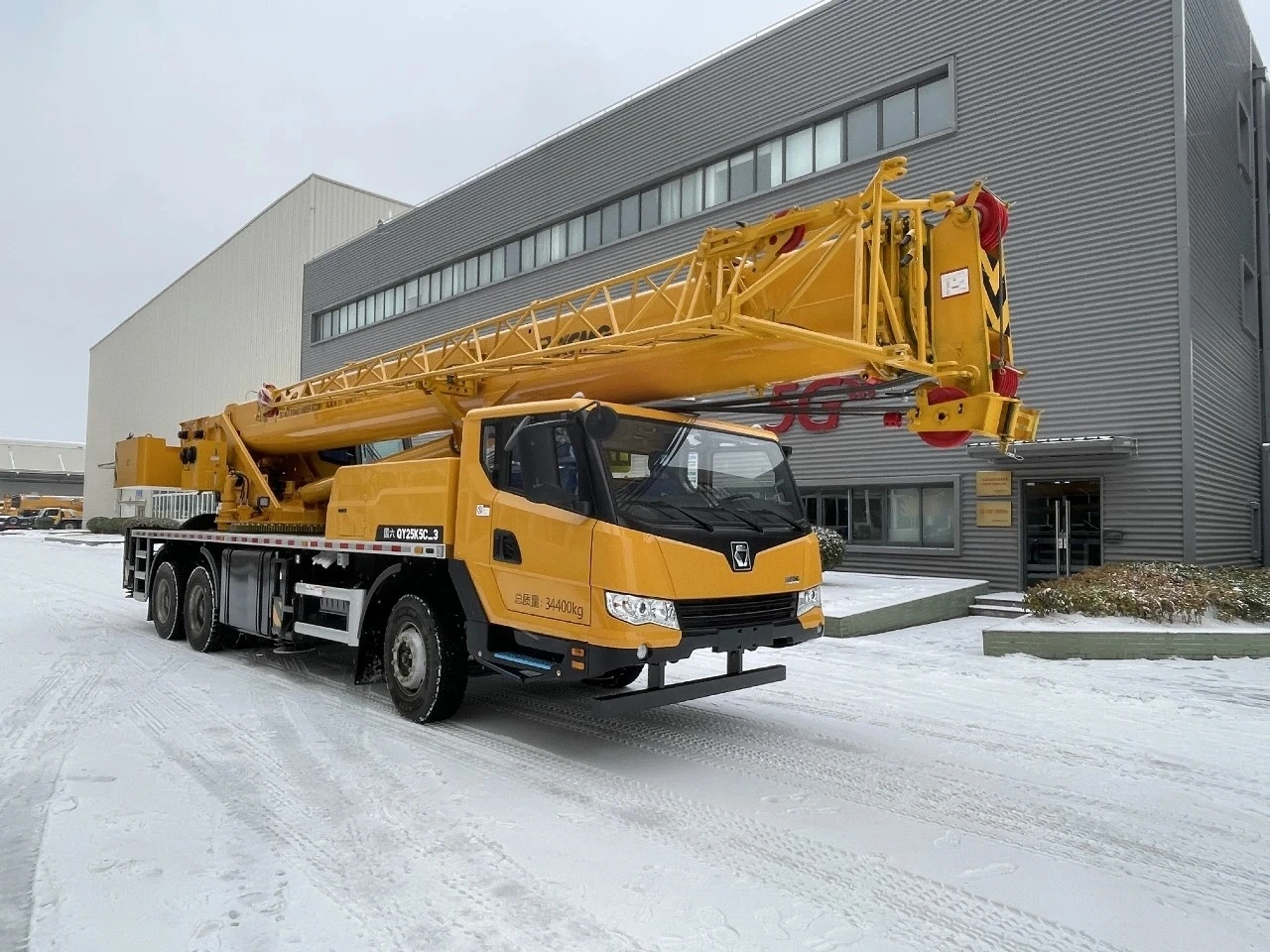
25t | XCMG QY25K5C | 42 m (+9 m jib = 51 m) | 1,132 kN·m (713 kN·m full boom) | 5.5 × 6.4 m | 3 axles, 33 t | ≈7.9 m | G+6 and above, radius beyond 25 m, lifting over the street, multi-storey steel |
Derived rule of thumb: usable street width ≥ lateral outrigger span + 1.5 m for carrier positioning, drain covers and pedestrian clearance. Measured on the ground, not from the road reserve.
Decision rule for Addis lanes
• Lane 4–6 m, buildings G+1–G+3 → 8–12t. A 16-tonner physically cannot deploy here, and forcing half-extended outriggers is how cranes overturn.
• Lane 6–8 m, buildings G+3–G+5 → 16t. This is the majority of Corridor Project demolition lots.
• Lane 8 m+, buildings G+6 and above, or reach over an active street → 25t, and only with a traffic-management plan.
For a contractor running several scattered demolition plots rather than one continuous site, two 16-ton units usually out-earn one 25-ton unit: they can work two plots at once, fit more streets, and cost less than half as much to buy. Browse current availability on the used 16-ton crane listings page (placeholder link, replace at publishing) or the used 25-ton crane listings page (placeholder link, replace at publishing).
How do you convert tonnage into a real lift at radius?
Never plan a demolition lift from the number on the door. Use the load moment: approximate capacity (tonnes) ≈ load moment (kN·m) ÷ radius (m) ÷ 9.81, then knock off the hook block and rigging (typically 0.3–0.5 t) and check the crane's own load chart at 75% of tipping load.Table 2 Approximate capacity at radius, derived from published load moments (simplified estimate — the crane's load chart governs)
Machine | Moment used | At 10 m | At 15 m | At 20 m | At 25 m | At 30 m At 40 m | At 40 m |
|---|---|---|---|---|---|---|---|
QY12 (12t) | 410 kN·m basic boom | ≈4.2 t | ≈2.8 t | — (boom limit) | — | — | — |
QY16D (16t) | 686 / 388 kN·m | ≈7.0 t | ≈4.7 t | ≈1.9 t | — | ≈1.3 t | — |
QY25K5C (25t) | 1,132 / 713 kN·m | ≈11.5 t | ≈7.7 t | ≈5.8 t | ≈2.9 t | ≈2.4 t | ≈1.8 t |
Dashes indicate the radius exceeds the boom length; figures use the basic-boom moment up to mid-radius and the full-boom moment beyond, so treat them as order-of-magnitude only. Boom strength, slewing geometry and outrigger configuration reduce these values further.
This is why the demolition question is really a reach question. Dropping a 3 t precast slab from the third floor of a building set back 8 m from the kerb needs roughly 3 t at 10–12 m — inside a 16-tonner's chart, outside a 12-tonner's once rigging is added. Lifting a rooftop water tank from a G+5 building with the crane parked across a 7 m lane needs 10–13 m of height plus 8–10 m of radius: the 16-tonner's 30.7 m boom does it comfortably; a 25-tonner is only needed if the crane must stand further back.
What does it cost to land a used crane in Addis Ababa?
Ethiopia is landlocked: essentially all imported machinery enters through the Port of Djibouti, then travels roughly 780 km overland to Addis Ababa. Total transit from a Chinese port is typically 25–40 days; plan 45–60 days from order to site.Table 3 Indicative landed-cost build-up, used truck crane, China → Djibouti → Addis Ababa (2026 ranges)
Cost item | Typical range (USD) | Basis / notes |
|---|---|---|
Machine price, FOB China (8–25 t, 2012–2021) | 6,000–78,000 | 8 t: 6,000–15,000; 12 t: 16,000–37,000; 16 t: 20,000–56,000; 25 t: 34,000–78,000 — condition, hours and paperwork drive the spread |
Inland haulage to Chinese port + export clearance | 500–1,500 | Usually inside the FOB quote |
RoRo ocean freight, China → Djibouti | 3,200–3,800 | Truck-crane dimensions; container shipping rarely fits a 12.85 m carrier |
Djibouti port handling and transit | 350–800 | Port congestion is common; book 2–3 weeks ahead |
Overland Djibouti → Addis Ababa (780 km, 3–5 days) | 900–2,500 | Low-bed for a 16–33 t GVW crane; light-vehicle rates of USD 500–900 do not apply |
COC inspection and certificate (per shipment) | 500–1,500 | Mandatory before shipment; see compliance section |
Clearing agent and documentation | 300–600 | ASYCUDA entry, TIN, import permit handling |
Import duty and 15% VAT | Confirm with your clearing agent | Duty depends on HS classification (cranes commonly fall under 8426.41); VAT is 15% on CIF + duty |
Worked example: a 2018–2020 16-ton unit at USD 30,000 FOB, plus USD 3,500 freight, USD 600 Djibouti handling, USD 1,500 overland and USD 1,000 COC = about USD 36,600 landed in Addis before duty and VAT. Budget a further 15% VAT plus duty and clearing on top, and hold a USD 2,000–4,000 spares and commissioning allowance for hoses, filters, a wire rope and one hydraulic seal kit.
Running costs (16 t, single-shift demolition work): diesel at roughly 35–37 L/100 km on the road and 4–6 L/hour while lifting, plus a driver/operator, annual servicing and tyre wear. In practice the crane's availability — not its purchase price — decides profitability on a demolition contract, because a machine waiting three weeks for a hydraulic hose is a crew standing idle.
What must you verify on the crane before it ships?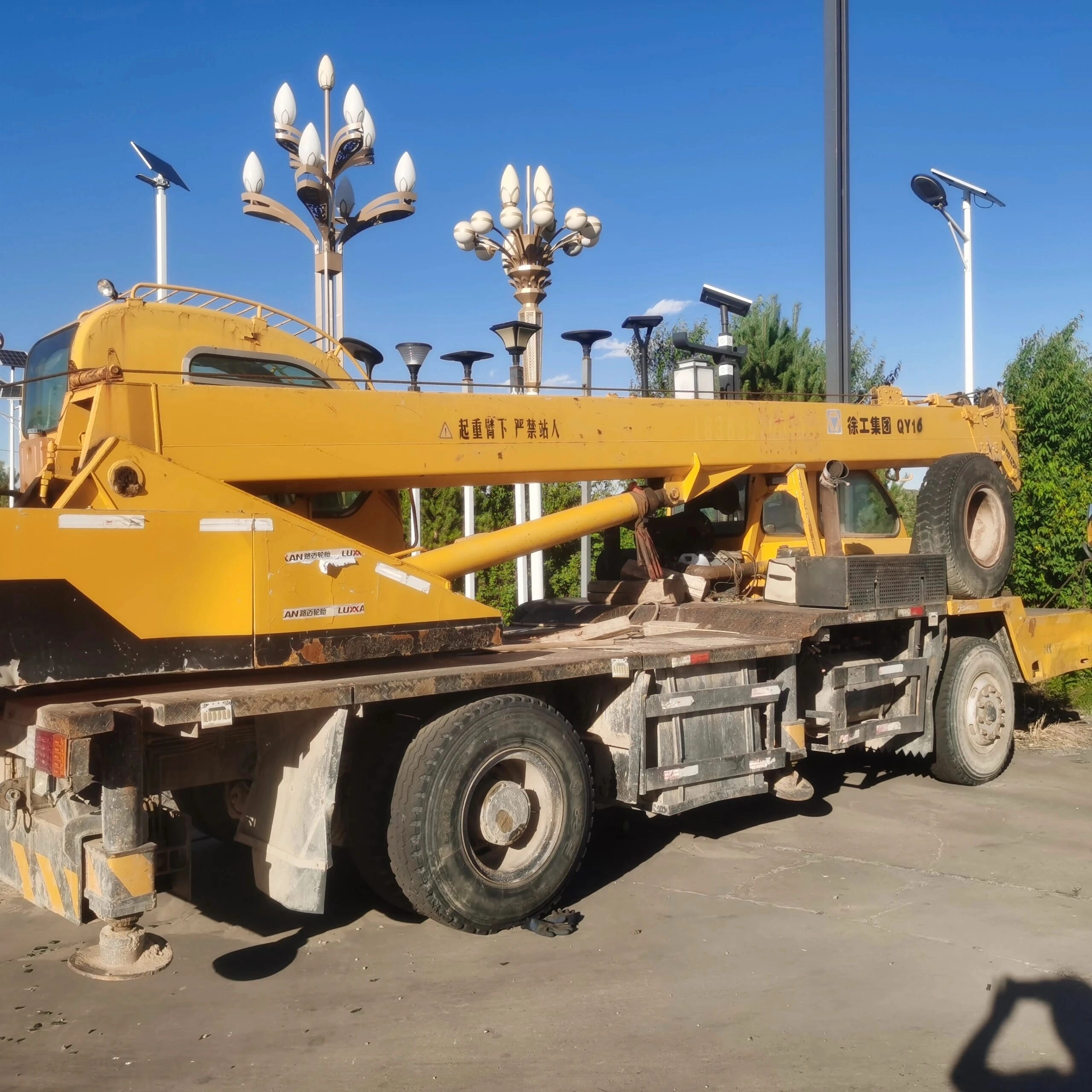
Buy on evidence, not on paint. Four blocks, each with photos or video on file, plus two Ethiopia-specific checks.
1. Structural components (fail here, walk away)
Boom sections: no weld repair or cracking at section roots, lower chord plates or boom-tip slider areas. Run the boom through full extension and retraction; listen and watch for binding.
Turntable, slewing ring bolts and gear-face condition; jib mounting points.
Outrigger beams, jack cylinders, pads and box welds; carrier frame for bending, twisting or secondary welding. Demolition cranes work on uneven backfill — outrigger boxes take abuse.
Hook blocks (25 t / 3 t as applicable) and wire rope against discard criteria (ISO 4309).
2. Hydraulic system
Main pump noise at idle and working speed; replacement commonly USD 4,000–11,000 depending on model.
Distributor and valve blocks for touch-up paint masking leaks; test all motions individually and in combination.
Oil sample: dark oil or metallic particles mean wear has started.
Boom cylinder and hose hold test: park at working angle for 10 minutes, check for drift.
3. Chassis and running gear
Cold start, exhaust colour, dash warnings; hour meter cross-checked against odometer, tyres, pedals and joystick wear.
Brakes, steering, lights; document validity.
Altitude and cooling: confirm the unit is turbocharged and that the radiator, fan drive and air filter are serviceable — Addis runs at about 2,350 m with heavy dry-season dust.
4. Cab, electrics and safety devices
Load moment indicator working and reading correctly, height limiter, warning lights, anemometer where fitted.
Wiring without improvised splices; pilot-control joysticks for fine modulation (essential when working beside live structures).
Paperwork: certificate of conformity, registration certificate, invoice, and — for export — proof of year of manufacture, maintenance records and export deregistration, which Ethiopian COC assessment for used machinery commonly requires.
A structurally and hydraulically sound unit justifies USD 3,000–5,500 more than a cosmetically similar one; every failed block is deducted at repair cost. The full scoring sheet is in our 12-step used truck crane inspection checklist .
What import compliance does Ethiopia require?
1. COC under the PVoC scheme. Ethiopia's Standards Agency (ESA) operates a pre-shipment verification of conformity programme; a Certificate of Conformity is required before shipment and checked at customs. Used goods are explicitly within scope, and each shipment needs its own certificate. Inspection is carried out by authorised third-party bodies; the certificate is issued only after document review and physical inspection at the loading site or port.2. Used construction machinery gets extra attention. Beyond the standard inspection, expect requests for year-of-manufacture evidence, maintenance records and proof of deregistration in the country of origin; used heavy machinery for construction and mining may also require a special import permit from the Ethiopian authorities before the COC process can start. Confirm the current requirement with your clearing agent before paying a balance.
3. Importer-side documents. Tax Identification Number (TIN), import permit, proforma invoice, packing list, bill of lading, certificate of origin, insurance certificate, and customs entry through ASYCUDA.
4. Practical points. Ethiopia drives on the right, so left-hand-drive Chinese units are correct. Expect 15% VAT on CIF plus duty, and confirm the HS classification and rate for your specific machine. Payment terms deserve planning: foreign-currency availability can delay letters of credit, so milestone payments against inspection and shipping documents are common in this trade.
What are the common pitfalls — and who carries which risk?
• Buying 25 tons for a 4-storey job. The crane cannot set up in a 6 m lane, costs twice as much, and burns more fuel per pick. Verify: walk the actual street with a tape before choosing tonnage.
• Planning lifts from nominal tonnage. A "16-ton crane" lifts about 1.9 t at 20 m. Verify: ask for the load chart for the exact boom length and outrigger configuration.
• Rolled-back hour meters. Verify: hours versus odometer versus wear on seat, pedals and joysticks.
• Shipping before COC is issued. Cargo without a valid certificate risks rejection, fines or return at the destination port. Verify: certificate in hand before the vessel sails, and the certificate details matching invoice, chassis number and shipment.
• Underestimating the corridor. Djibouti congestion plus the 780 km overland leg can add two weeks. Verify: book RoRo space 2–3 weeks ahead and keep a 45–60 day delivery buffer in the contract.
• No parts plan. Hoses, seals, filters and wire rope fail first. Verify: ship an initial spares package with the crane and identify a workshop in Addis that handles XCMG or Sany hydraulics before the machine lands.
Risk boundaries: the seller is responsible for the condition as described, the accuracy of hour and repair records, document completeness, and support through the COC inspection; the buyer is responsible for the import permit, duty and VAT, inland logistics from Djibouti, site permissions and demolition permits from the sub-city administration, operator competence and lift planning. Any promise about "guaranteed clearance" or "all-inclusive duty" that is not written into the contract should be treated as non-existent.
How we evaluated this recommendation
This guide combines:(1) OEM published specifications for the XCMG QY8D-class, QY12, QY16D and QY25K5C;
(2) public reporting on the Addis Ababa City Corridor Project, 2022–2026, including corridor lengths, launch dates and the scale of low-rise demolition in Piassa, Kazanchis and Kebena;
(3) 2026 freight, port-handling and COC figures for the China–Djibouti–Addis corridor, plus listed prices for used 8–25 t cranes on Chinese platforms. Capacity-at-radius figures are simplified derivations from published load moments, not load charts. No in-house inventory is promoted; every tonnage band is assessed on the same criteria. Site conditions vary plot by plot — a tape measure and a walk-round remain mandatory before you commit.
FAQ
Can an 8-ton crane handle demolition debris?Yes, for the right debris. Skips, roof sheets, timber trusses and broken masonry in 0.5–2 t loads at short radius are within an 8-tonner's chart, and its 4 m outrigger footprint gets into alleys a 16-tonner cannot enter. It cannot lift precast panels or steel beams from upper floors at radius — that is 16-ton work.
Do I need a 25-ton crane for a G+5 building?
Usually not. A 16-tonner's 30.7 m main boom reaches over a G+5 roof with the carrier on the street, provided the pick radius stays inside roughly 18–22 m. The 25-tonner earns its price when the crane must stand further back, when lifts exceed about 3 t at that radius, or when the building is G+6 and above.
Is a 16-ton crane enough for precast slab panels?
For typical 1–3 t panels lifted at 8–14 m radius, yes — that is roughly 3–4.7 t of chart capacity before rigging. Confirm the panel weight and the actual radius on site; edge lifts and long panels need a spreader beam, which adds weight.
How long from order to a site in Addis Ababa?
Plan 45–60 days: 2–4 weeks to complete COC inspection and booking, 18–28 days at sea to Djibouti, about a week for port handling and clearance, then 3–5 days overland. Add two weeks if you order during peak construction season or Djibouti is congested.
Can I import an older used crane into Ethiopia?
There is no single published age cap for cranes that can be quoted reliably here, but older units face stricter document scrutiny within the COC process and are harder to insure and to resell. Practically, 2012–2020 units with complete records clear more smoothly than 2005-era machines. Confirm the current position with your clearing agent before committing, and treat this as a per-shipment question, not a general rule.
Left-hand drive or right-hand drive?
Ethiopia drives on the right, so the left-hand-drive configuration produced for the Chinese market is correct. Confirm the unit has not been converted, and check that instrumentation labels the buyer's operators can read.
Sources
• XCMG QY16D factory specifications — D1CM / manufacturer catalogue data: https://news.d1cm.com/201010150100070.shtml
• XCMG QY12 factory specifications — D1CM product database: https://product.d1cm.com/data/xcmg/xcmg_001/100087.shtml
• XCMG QY25K5C factory specifications — D1CM product database: https://product.d1cm.com/bomagbomag004/118399/
• XCMG QY8D-class crane specifications — manufacturer catalogue data: https://www.jinfungcrane.com/xcmg_crane/QY8D_CRANE.html
• Addis Ababa City Corridor Project — overview, launch date, corridor lengths: https://www.wikiwand.com/en/articles/Addis_Ababa_City_Corridor_Project
• Corridor project progress and scope — Ethiopian News Agency, June 2025: https://www.ena.et/web/eng/w/eng_6734308
• Demolition in Piassa, Kazanchis and Kebena; displacement figures: https://africanpeace.org/addis-ababas-drive-to-become-dubai-of-africa-displaces-thousands-raises-fears-of-cultural-loss
• Ethiopia PVoC / COC requirements, including used goods and used construction machinery: https://huayutest.com.cn/xinwendongtai/205506.html
• China–Djibouti–Addis freight, transit times and port handling: https://sagmoto-trucks.com/blog/e3-dump-truck-ethiopia-construction.html
Published: 2026‑11‑4
Last reviewed: 2026‑11‑4
Author: 【Flora He 】Equipment Inspector, FairTradeMachinery
FairTradeMachinery
أنت تصمم الرؤية. نحن نتعامل مع الأجزاء الصعبة.
مساعدة المشترين العالميين على الوصول إلى آلات وحلول ما بعد البيع ذات قيمة أفضل.
بصفتنا منصة تبادل الآلات المستعملة الرائدة في الصين ، نحن نقع عند تقاطع تقنية إنترنت الأشياء والتجارة B2B. هذا يعني بيانات المخزون في الوقت الفعلي ، وملفات البائعين المعتمدين ، وعملية معاملات مصممة للمشترين عبر الحدود الذين لا يمكنهم دائمًا فحص الآلات شخصيًا. تجاوز مستخدمونا في الصين 1.5 مليون مما يعني أن لدينا المصدر الأول لأصحاب الحفارات والعدد المكافئ من الآلات. هذا يعني أننا يمكننا تغطية جميع الموديلات الشائعة وحتى الاحتياجات المحددة ، بغض النظر عن الحالة.






 دردشة مباشرة على واتساب الآن


 FAQs
 WhatsApp